Trust, Verified: How to Vet a UK Pet Sitter or Dog Walker in 2026
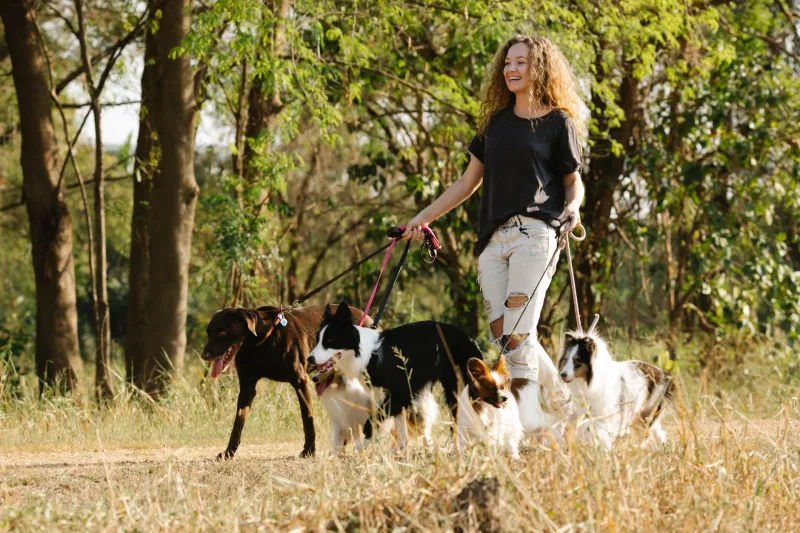
A marketplace profile is a sales document. It is designed to show you a cheerful stranger in wellies, a delighted spaniel, and a five-star average built from eleven reviews. What it cannot show you is whether that person holds a licence if their work requires one, whether their insurance would actually pay out if your dog slipped a lead on the high street, or what the plan is when you are stuck on a delayed train and nobody can get to your cat.
None of that is a reason to distrust sitters. It is a reason to spend twenty minutes on the boring questions — the ones that separate a booking from a gamble.
A licence is not the same as a badge
In England, the licensing regime set out in the Animal Welfare (Licensing of Activities Involving Animals) (England) Regulations 2018 catches home boarding and day care. It does not generally catch someone who simply walks your dog on a lead and hands it back. Wales and Scotland run their own versions with slightly different thresholds and fee structures. So 'fully licensed' on a profile can mean three quite different things depending on where the sitter lives and what they actually do all day.
Ask what, precisely, they are licensed for. Ask which council issued it and for the licence number. Then ring the council's licensing team — they will usually confirm whether a licence exists and whether it is current. If the sitter offers day care or boarding, ask about the star rating used in England and whether the inspection report is published. A good provider will not flinch at any of this. A vague one will.
Dog walkers who never bring animals into their own home often need no licence at all. That is not a loophole to be frightened of, but it does mean licensing cannot be your only filter.
Insurance: the right kind, in date
Two covers matter. Public liability protects against the moment your dog knocks over a shopper or damages a parked car. Care, custody and control covers the animal in the sitter's charge — the slipped collar, the escaped gate, the swallowed sock.
Ask for the certificate rather than the word 'insured'. Check the date, the limit, and the exclusions. Plenty of policies quietly rule out home boarding, exclude breeds listed under the Dangerous Dogs Act, or refuse dogs with any bite history. A sitter who cannot produce a certificate within a day or two is telling you something.
The contract is the relationship
A one-page agreement is not bureaucracy; it is the thing you will both read when something goes wrong. It should cover the basics honestly: the service, the times, the price, cancellation terms, what happens if the sitter is ill, whether anyone else will ever have access to your home, and how photos and videos may be used.
If there is no contract at all, ask why. Handshake arrangements work beautifully until they do not.
Emergency planning is the bit everyone skips
Before the first visit, agree the vet, the out-of-hours practice, your consent-to-treat limit, and who pays the bill if the answer is 'yes, treat, immediately'. Leave the microchip number, vaccination record, insurance details and any medication in writing. If your dog has a bite history or a fear of other dogs, say so plainly — a sitter who knows the truth can manage it, and one who finds out in the park cannot.
The printable question list
Copy this into your notes app, or print it and scribble on it during the first call.
- Are you licensed, and for what exactly? Which council, and what is the licence number?
- Can I see your insurance certificate, including the care, custody and control cover?
- Do you have a written contract I can read before I book?
- Which vet would you use, and which out-of-hours practice backs them up?
- What is your consent-to-treat limit, and how do you handle payment?
- Have you got a canine first aid certificate, and when was it renewed?
- How many dogs are in a group walk, and how are they matched?
- What happens if you are ill, on holiday, or snowed in?
- How do you handle a dog that is unwell mid-visit?
- Are you DBS checked, and would you share the certificate?
- Can I see two references from clients who are not your relatives?
- What is your policy on keys, lockboxes and alarm codes?
Red flags worth walking away from
Pressure to book before you have seen the paperwork. Cash-only arrangements with no receipt. Reluctance to let you meet the sitter before the first booking. Group walks where the numbers keep growing and the answer to 'how many dogs?' is 'it varies'. Anyone who brushes off the insurance question with a joke. And anyone who seems irritated by your questions — because the questions do not stop after you hand over the keys.
Do your own verification, offline
Marketplace reviews are useful but they are curated by the platform. Widen the net. Ask your vet's reception team whether they know the person by name — they see the same local sitters every week. Ask the groomer. Ask the woman at the end of the road who has owned dogs for thirty years. Search the business name on Companies House if they trade as a limited company, and check the council register directly rather than trusting a screenshot of a certificate.
Finally, book a paid trial. One walk, or one afternoon of day care, while you are nearby. It costs a little and tells you more than a hundred testimonials, because you get to see how your animal comes home: tired in the good way, or unnerved in the other way.
The best sitters in the country will pass every one of these checks without breaking stride. The ones who will not are precisely the ones worth finding out about before your holiday, not during it.